Sidley and Molson Lakes Habitat and Recreation
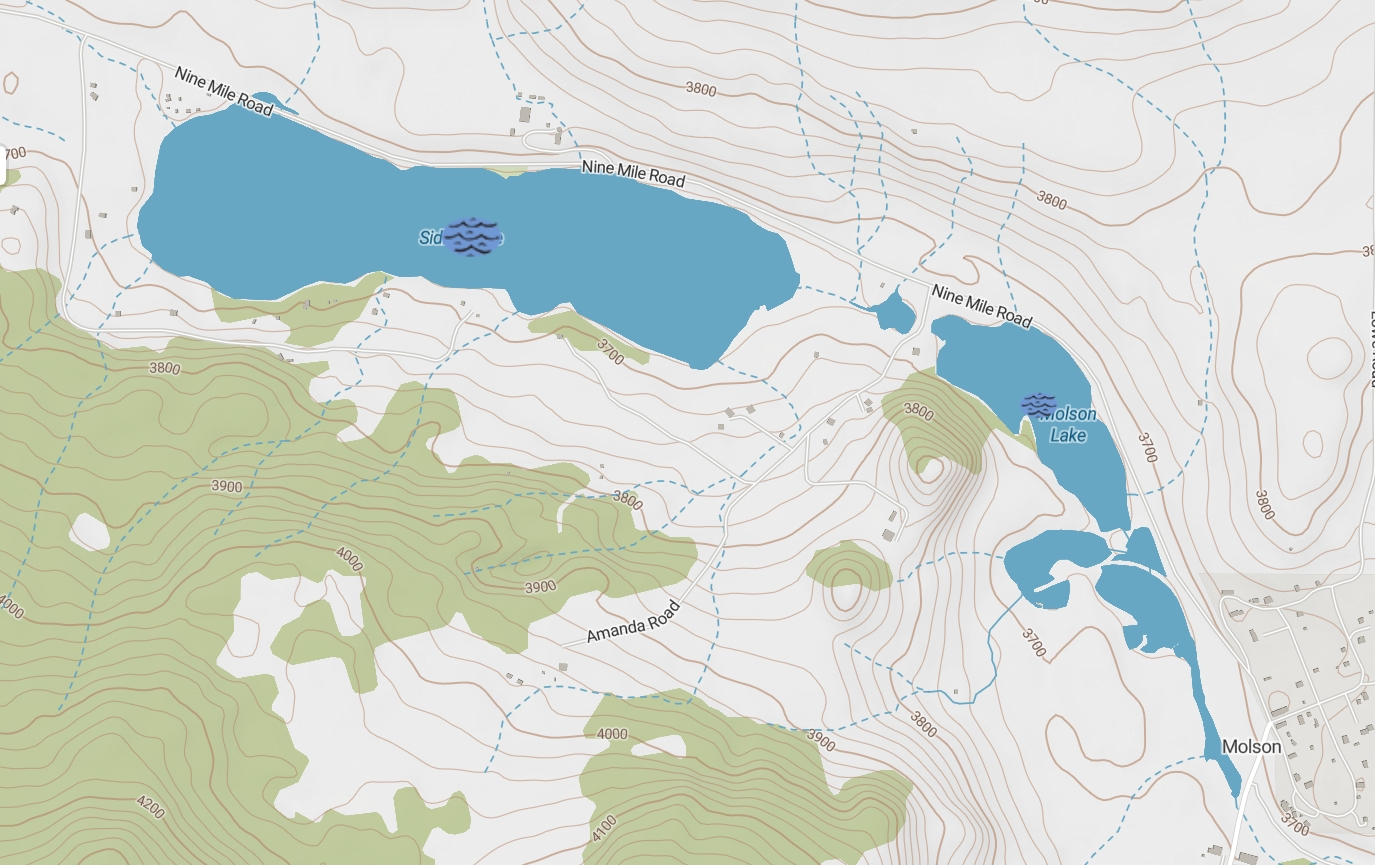
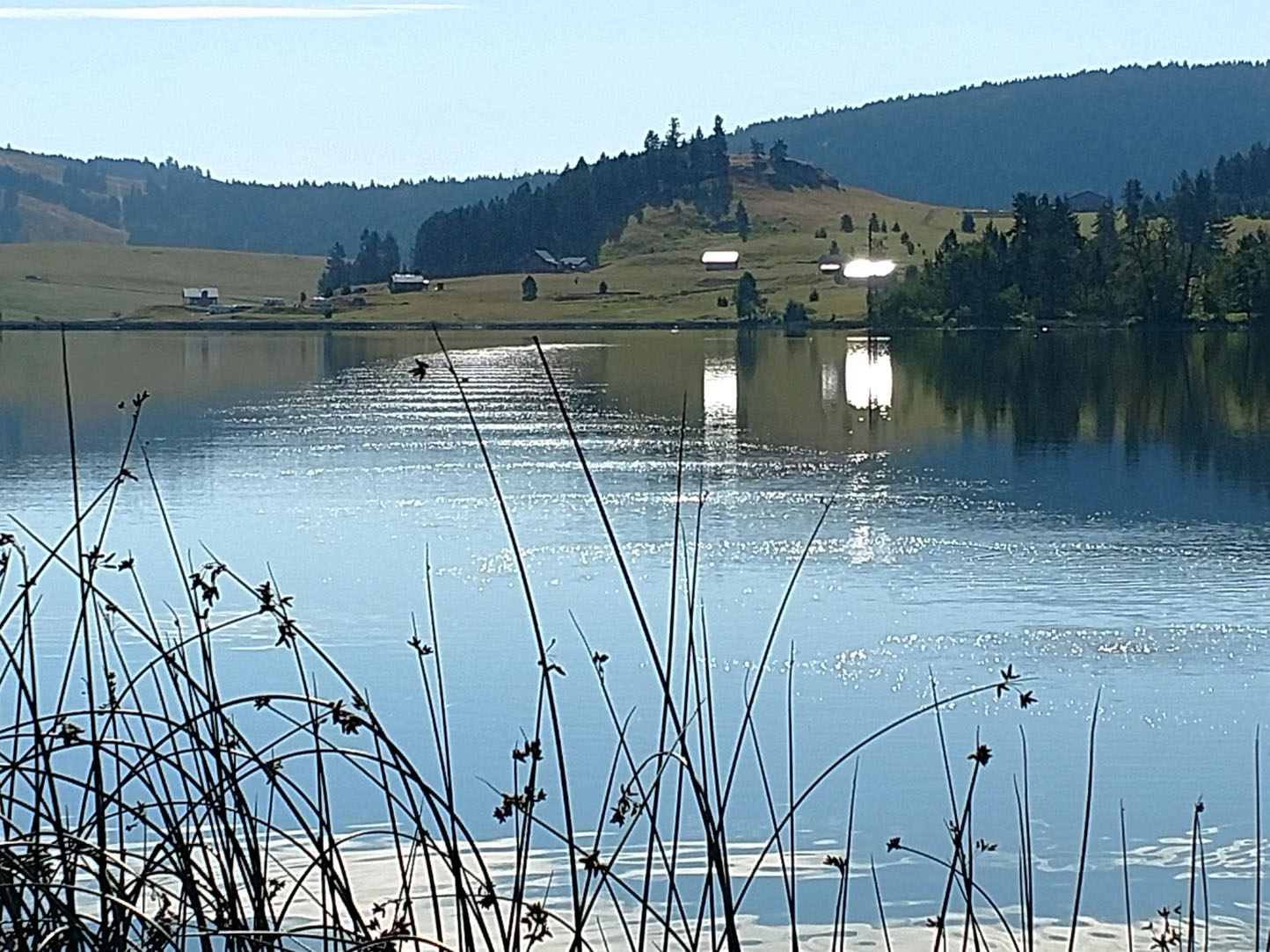
Sidley and Molson Lakes are natural freshwater lakes located approximately 11 miles from Oroville, Washington, in the Okanogan Highlands. With constant open water, the lakes are a year-round sanctuary for wildlife. The lakes are on the Pacific Migratory Flyway for birds and a transboundary migration corridor for elk. Historically, birds, such as the Common Loon, have nested at the Lakes, and visiting bird watchers have identified over 100 bird species. Researchers have also documented 44 mammals in the Okanogan Highlands.
History
In 1955 and 1956, a long winter with deep snows caused catastrophic fish kills in the lake, depriving raptors and Common Loons of food and local fishermen of harvests.
The Oroville Sportmen Club and Washington Game Department tested an aerator system in the lake to solve the fish kill issue in the winter of 1957. In 1959, the system was permanently installed. At the time, it was known to be the second of its kind in the United States. As a result, the Lakes' health improved leading to clearer water, healthier and larger fish for harvesting, and availability of fish for feeding birds.
In 1981, John Webster Myrick, a former engineer with the Army Corps of Engineers, moved to Molson, Washington, where he operated a hunting and fishing camp on Sidley Lake. John improved the aerator system and continued its operation with support from the Oroville Sportsman Club. John managed the system until he died in 2014 at the age of 94. In later years, he was assisted by Pat and Robin Stice of Eden Valley Ranch. His son, Kevin Myrick - an HCSC Board Member - took over the management of the aerator system and carried John's legacy forward. The project continues to be community-driven with assistance from Michael Buckley, Dave Mullins, and Jerry Nelson. Learn more about benefits of the aerators here.
The Project
In 2023, HCSC began contributing to the Project. Under Kevin's leadership, among other improvements, the main aerator was rebuilt, and the lines were expanded approximately 1800 feet. In 2025, HCSC initiated a strategic plan to further improve the Lakes' habitat for Common Loons and develop the non-invasive recreational potential of Sidley and Molson Lakes.
The main goals of the project are to increase Common Loon habitat, non-invasive tourism, and recreational opportunities by:
- Re-establishing the historic Common Loon nesting population.
- Establishing Molson and Sidley Lakes as a major destination for four-season bird watching.
- Providing signage and wayfinding for increased understandability of available species.
- Making recreational opportunities available to mobility disabled people by providing an ADA restroom facility and a bird watching/photography platform.
- Enhancing existing fishing opportunities at the Lakes through aerator improvements.
- Eliminating human waste in residential areas and near lake waters, being that only one portable toilet serves lake activities.
Why Focus on Common Loons?
The Common Loon (Gavia Immer) (CL) is classified in Washington State as a Species of Greatest Conservation Need. The habitat for CLs in Washington has contracted significantly northward over time. Less than 20 breeding pairs remain in Eastern Washington.
Breeding CLs have nested at Sidley Lake and Molson Lakes. Interviews with a long-time resident indicate that four CL nesting pairs existed at or near the site in the 1970s. However, those nesting locations are currently identified as historical or unconfirmed. In 2010, 13 Northeast Washington lakes were listed by the Fish and Wildlife Commission for protection from the use of lead fishing tackle. Studies indicate that CLs experience a high mortality rate through ingesting lead weights. Sidley and Molson Lakes were not listed as protected.
Today, conflicting evidence exists regarding the persistent conclusion that CL breeding pairs do not habitat Sidley and Molson Lakes. For example, in 2021, Washington Department of Fish and Wildlife (WDFW) biologist Jeffrey Heinlen reported observing a CL nesting site at the south end of Sidley Lake. A resident reported seeing 5-6 loon chicks during the same period. Sidley Lake residents also reported CL sightings throughout the breeding season as recently as the spring and summer, 2025.
One of the issues HCSC seeks to address is whether Sidley and Molson Lakes are CL habitats, and if so, can these habitats be enhanced to increase breeding/chick/fledgling viability? Second, what is a successful program for habitat improvement that can be applied by private landowners and conservation entities for improving CL or restoring habitat on lakes facing similar development pressure? Toward resolving these questions, HCSC collaborates with CL research organizations experienced in designing and operating CL habitat and monitoring programs.
The Plan
The plan and related activities are:
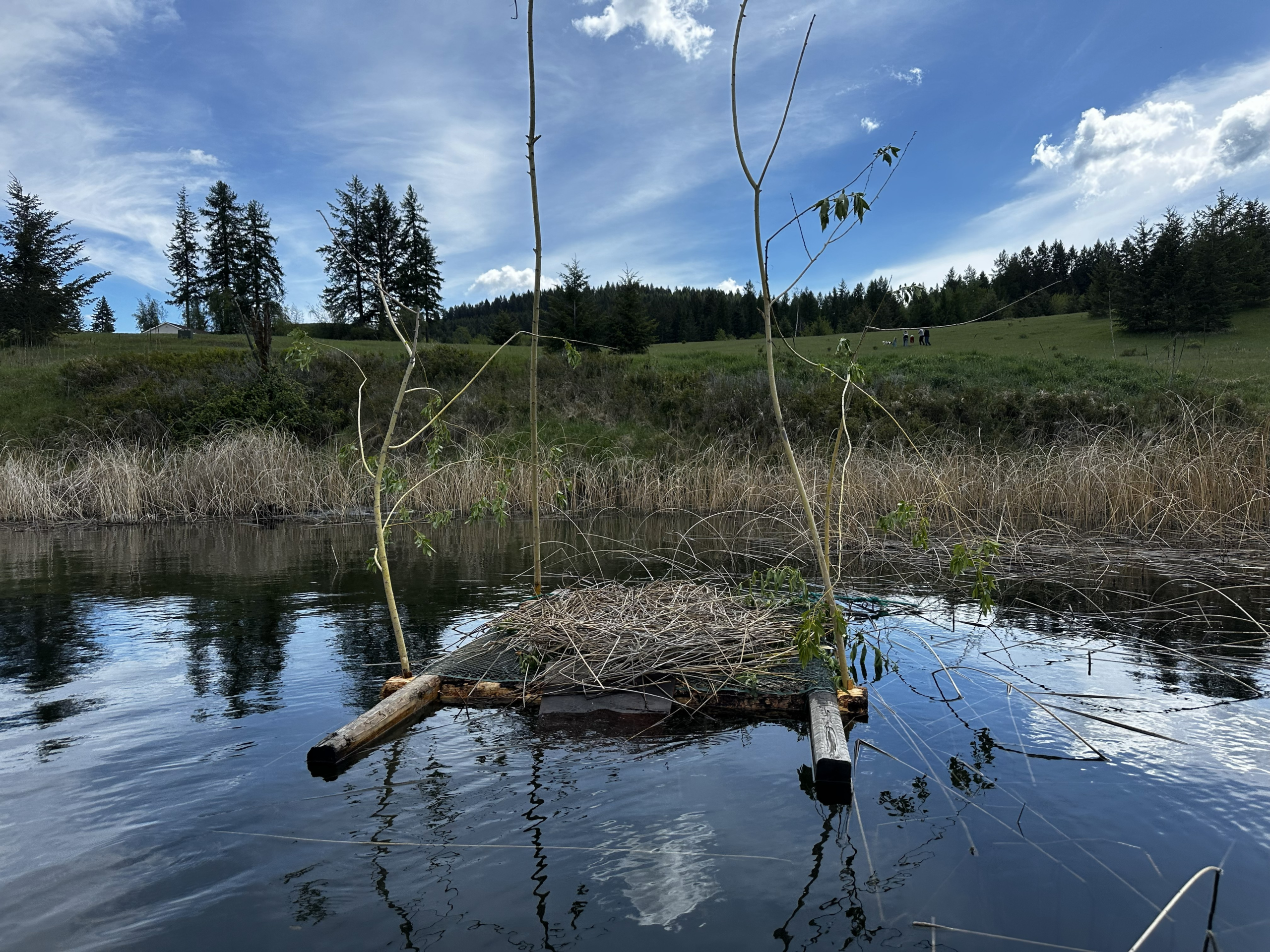
- Obtained a hydraulic permit to site and launch three Common Loon nesting platforms, two of which were launched in 2025.
- Enlisted the help of resident monitors to perform Common Loon monitoring.
- Educating people using the lake on the use of non-leaded fishing tackle and performing related clearing activities.
- In 2026, launch a third Common Loon platform.
- Purchase upgraded monitoring equipment to measure pH, turbidity, water temperature, and dissolved oxygen.
- Rebuild the aerator shed to house the main aerator and an in-line backup aerator.
- Fundraise to construct an ADA birdwatching platform and vault toilets and design/build a solar-powered aerator in Molson Lake.
- In the meantime, fund the installation of a second temporary toilet.
This project has been listed by the Okanogan County Commissioners as a priority project for 2026.